HIST 111: United States History to 1877 (Fall 2019)
10:30 – 11:45 a.m. Tuesday and Thursday • ILC 203
Instructor: Dr. Leslie Madsen
- E-mail: lmadsen@boisestate.edu
- Office phone: (208) 426-1700
- Office: Riverfront Hall 313J (3rd floor, inside the IDEA Shop)
- Dr. Madsen’s office hours: 12:00 – 1:30 p.m. Thursday; 9:00 – 10:30 a.m. Friday; and by appointment.
Teaching Assistant: Noah Szajowitz
- E-mail: noahszajowitz@u.boisestate.edu
- Noah’s office hours: 12:00 – 1:30 p.m. Tuesday and Thursday
- Office: History Department 169 (in the Library building, but enter from the northwest side or rear of the building, not the main entrance)
Introduction
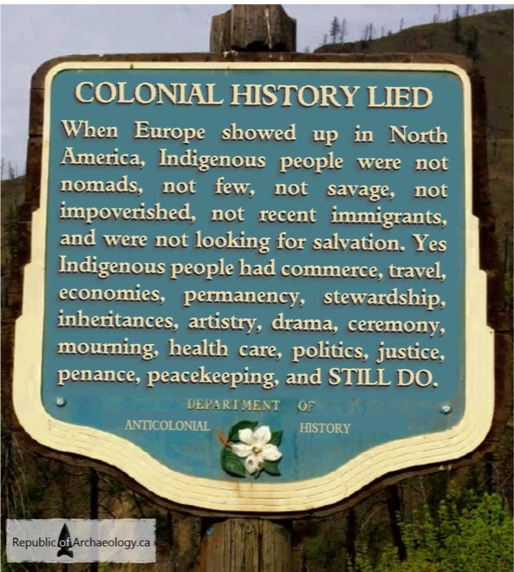
Even before Europeans anchored their ships off the east and west coasts of North America, the territory that became the U.S. was not monocultural. On the contrary, the experiences and perspectives of people living in North America have always been shaped by the collision and confluence of cultures, including countless indigenous peoples; the Spanish, British, French, Dutch, and Portuguese explorers and colonizers; Chinese laborers; and peoples from Senegambia, west-central Africa, and west Africa who were sold into slavery.
In keeping with this complexity, this course will take as its subjects not only the politicians, soldiers, inventors, and explorers with whom you might have been made familiar in K-12 history lessons, but also the workers, enslaved people, reformers, mothers, children, artists, and others whose stories rarely have been central to traditional narratives of U.S. history.
Along the way, we’ll ask what conditions and forces allowed different kinds of Americans to speak and act in ways that allowed for, or limited, freedom and self-determination. We’ll also explore why in 2019 so many U.S. Americans have uneasy relationships with this nation’s history and the ways it gets told.
Course materials
- Lisbeth Haas, Saints and Citizens: Indigenous Histories of Colonial Missions and Mexican California(2014)
- Joseph Locke and Ben Wright, eds., The American Yawp(2019). Available free online at that link, where you can also order a print copy if you prefer.
- Joseph Locke and Ben Wright, eds., The American Yawp Reader(2019). Available free online at that link.
- Clarence Walker, Mongrel Nation: The America Begotten by Thomas Jefferson and Sally Hemings(2010)
- various readings linked from the course schedule
Learning Goals
By the end of the course, students will:
- ask thoughtful, meaningful questions—and seek answers to them by carefully reading and interpreting primary and secondary sources.
- articulate how the history of chattel slavery has influenced the political, economic, and cultural development of the U.S.
- identify, alongside the disenfranchisement and genocide of indigenous North Americans, the cultural confluences of indigenous and European cultures.
- identify some methods by which history is retold and deployed in contemporary political rhetoric.
- develop sufficient historical literacy to become informed participants in contemporary U.S. cultural and political life.
- identify historical “upstanders,” analyze these figures’ actions, and consider in what contexts they (students) might be moved to stand against the tide of popular cultural sentiment and practice.
Engagement
The day-to-day requirements of this class are simple: do the required reading, reflect on it, and come to class prepared to engage in thoughtful discussion. (I promise to do the same.)
Your presence in lecture and section is very important. Engagement in discussion and other course activities constitutes a significant portion of your grade (15%). To receive an A for your participation, you must participate meaningfully in class. (Shy students, don’t worry. Small-group discussion and activities count toward engagement.) Merely attending class will earn you a C- for engagement.
Digital devices
If you see me outside class, chances are I’ll be sitting in front of a laptop, browsing the Internet (for research and teaching, of course!) or with my eyes glued to my iPhone. Although I’m a bit old to be a “digital native,” I’m every bit as addicted todependent on these devices as my students can be. That said, these devices do tend to divide our attention in a classroom, so during class I’d appreciate your only using them when they’re necessary to access course materials or to complete course activities.
Service Learning
This is a service-learning course. This means we are using service in our community as a means of learning and applying information from our course.
We will work with the Wassmuth Center for Human Rights to explore the meaning of “upstanders” in U.S. history. We will create content for posters to be displayed in the outdoor classroom at the Idaho Anne Frank Human Rights Memorial.
Writing
The quality of your writing—both its clarity and the depth of thought expressed in it—contribute significantly to your final grade in this course. It is imperative, then, that you schedule sufficient time to conduct the research required for each paper, write a first draft, and conduct several revisions. I recommend you form a writing group with two or three other students to swap papers at least a few days before they are due.
Late paper policy
In the historical professions, deadlines matter. Exhibitions must open on time. Grant deadlines aren’t negotiable. Collaborative public history endeavors—like building digital tools and organizing festivals—require everyone to contribute in a timely manner so that work can proceed. The same holds true for this class. Assignments must be turned in at or before the beginning of class on the day they are due.Late assignments will be penalized 1/3 of a grade (e.g. a B becomes a B-) after the beginning of class, and I will deduct an additional 1/3 grade for each 24 hours that pass before you turn in the paper.
That said, I’m not heartless. If you have an emergency or anticipate not being able to turn in your assignment on time, come see me and we’ll see if we can work something out.
Please note: Technological failure does not constitute an emergency.Hard drives fail, servers go down, passwords get forgotten, two-factor authentication doesn’t show up in a text, and files get corrupted. You must plan for such contingencies: keep backups of your files, have extra ink cartridges handy, know where the local wifi hotspots are in case your usual internet service goes down. Technological issues are not excuses for late work. Please protect yourself (and your grades) by managing your time and backing up your work.
Grade distribution
Engagement during class: 15%
All varieties of engagement during class count, assuming you have come prepared (having done the reading/viewing for the day). If you’re shy, I hope you become more comfortable with participating in large-group discussion. That said, you’ll have plenty of opportunities to participate in small-group activities and discussion. Coming to office hours (and using that time meaningfully!) also may boost your engagement grade.
Short essays (15% total):
- Exploring reparations: 5%
- Native American cultural confluences: 5%
- Applying Upstander taxonomy: 5%
These short essays are designed to be places where you can get feedback from Noah and Dr. Madsen on your writing and research before you tackle the higher-stakes Upstander assignment.
Upstander assignment (40% total):
- Biographical essay + images: 15%
- Justification: 10%
- Reflection: 10%
- Presentation: 5%
The Upstander assignment will unfold across the semester. It has many small parts, but Noah and Dr. Madsen will support you in every step of project development.
Midterm exam: 15%
Final exam: 15%
Plagiarism
A student commits plagiarism not only if she turns in someone else’s work as her own, but also if she borrows others’ ideas or phrases without giving them credit. We can discuss this in class if anyone has any questions. Any student who plagiarizes or cheats on any assignment (besides the 100% plagiarized paper assignment) may receive zero credit for the assignment and/or an F in the course and may be subject to academic discipline by the university.
You can learn more about academic integrity at the Dean of Students’ website.
I am interested in yourthoughts and yourcreative and analytical work. Please share them with me!
Accommodations
I have done my best to craft this course using the principles of universal design.
The Universal Design for Learning is the process of making course materials and activities accessible to all students rather than waiting for students with disabilities to ask for accommodations. For example, in this course:
- Any videos will be close captioned and I will turn on captions if I show videos during class. While originally designed to benefit students who are D/deaf, captions also benefit English language learners, some students with ADHD or other conditions that can make it challenging to focus, and any students who are in a situation where they can’t turn up the volume on the video (for example, because the baby or toddler just finally fell asleep).
- You will have the opportunity to turn in some assignments in an alternative format.
- You will be able to take the midterm and final exams at home or during the designated class period.
- I will describe, or have you describe to each other, any images I project on the screen. I have found this practice not only helps students with poor vision or color blindness, but benefits all students because we all notice different things in images. We help each other notice new things and thereby learn more.
- You will have multiple ways to engage with course instructors: in person, via e-mail, through video chat, and on the phone.
That said, I need to hear from anyone who has a disability that may require some modification of seating, assignments, or other class requirements so that appropriate arrangements may be made. Please see me after class or during my office hours.
In addition, students with disabilities needing accommodations to fully participate in this class should contact the Educational Access Center (EAC). All accommodations must be approved through the EAC prior to being implemented. To learn more about the accommodation process, visit the EAC’s website. Dr. Madsen works regularly with the staff of the EAC, and they’re incredibly nice, helpful professionals.
Talk to Dr. Madsen
I will be available during my office hours to address your concerns with the class and assignments. I encourage you to come see me if you feel you have not been offered a chance to participate in class discussion, you are troubled by a particular assignment, you would like to talk more with me about an issue raised in class, or you have concerns about your performance in the course.
I have a couple decades of experience helping students connect with the resources they need to succeed inside and outside of the course. Please don’t hesitate to come see me if you’re feeling uncertain or lost.