• Skip to primary navigation
  • Skip to main content

History 111

Fall 2019

  • Syllabus
  • Course schedule
  • Assignments
  • Resources

Leslie Madsen

Visit to the Idaho Anne Frank Human Rights Memorial

Visit to the Idaho Anne Frank Human Rights Memorial

by Leslie Madsen · Sep 10, 2019

On Thursday, September 19, class will meet at the Idaho Anne Frank Human Rights Memorial for a tour of the memorial with Dr. Dan Prinzing of the Wassmuth Center for Human Rights, our course’s service-learning partner.

We will begin promptly at 10:30 a.m. Please dress appropriately for the weather, as we will be outside for 60-75 minutes.

The memorial sits at 777 S 8th Street in Boise, adjacent to the Cabin and the downtown library.

Here’s a map to the memorial:
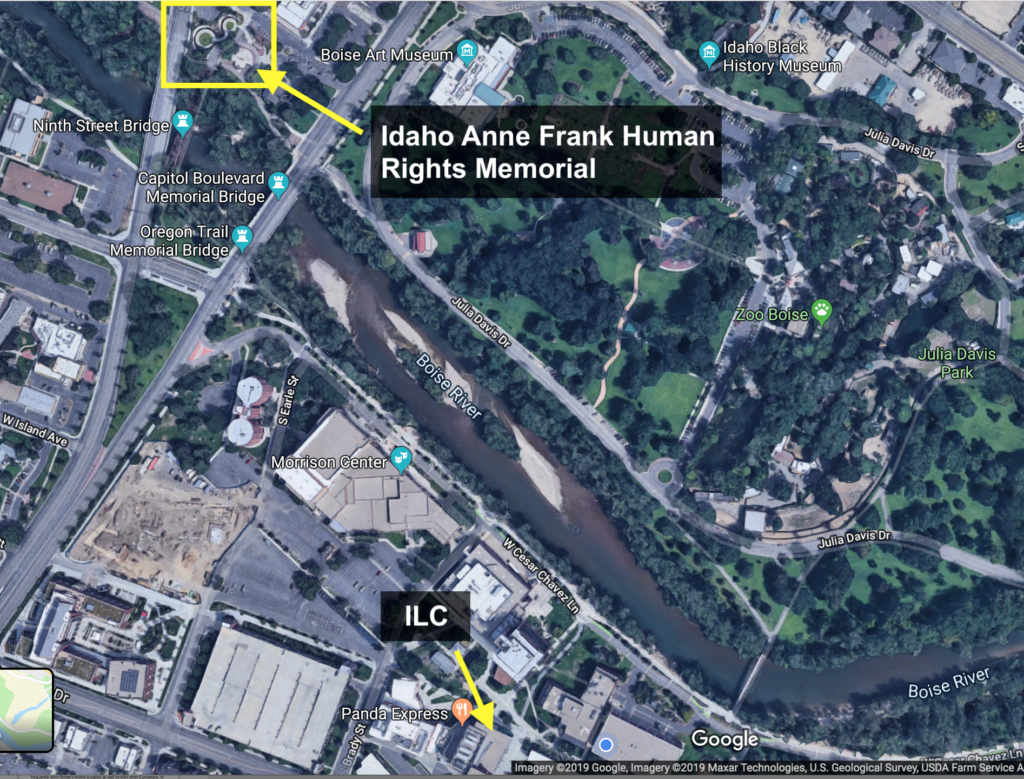
Satellite map view depicting location of Anne Frank Human Rights Memorial

It’s a short walk to campus, but if you prefer to drive, there is limited parking near the memorial.

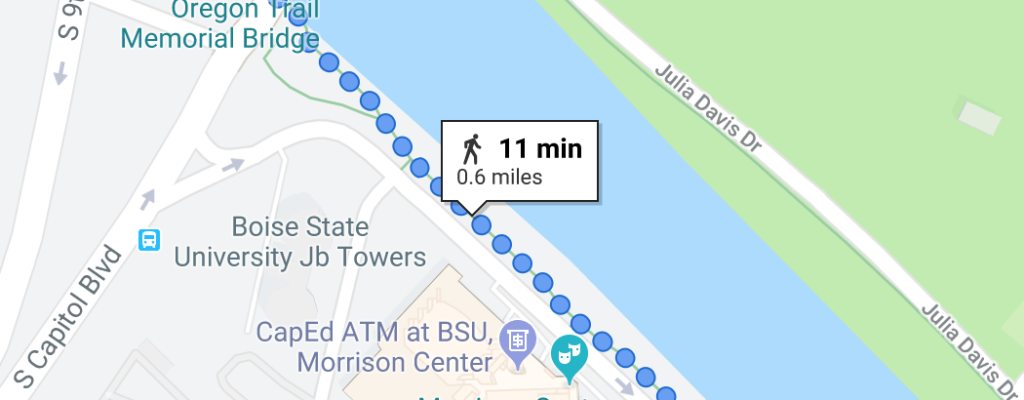
Here are walking directions from the ILC to the memorial:

  • Walk from the ILC to the Boise River.
  • Turn left on the Boise River greenbelt.
  • Go under the Capitol Boulevard bridge.
  • Veer left and proceed up the sloping sidewalk toward 9th Street.
  • Instead of crossing 9th Street, turn right. Walk across the large footbridge (rust-colored frame with wooden plank footing) to the other side of the river.
  • The memorial sits directly on the other side of the bridge.
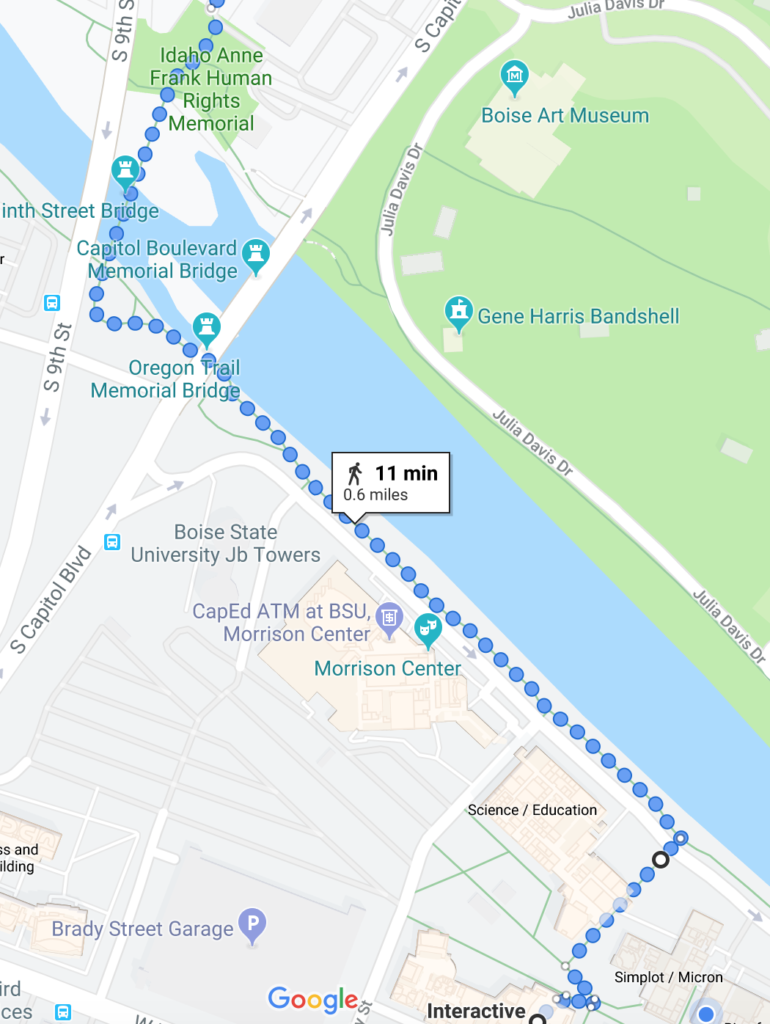
Walking directions from the ILC to the memorial

Filed Under: Uncategorized

Colonization patterns

by Leslie Madsen · Sep 10, 2019

Download the handout for this activity.

Filed Under: Material from class sessions

Indigenous peoples, colonizers, and whiteness

Indigenous peoples, colonizers, and whiteness

by Leslie Madsen · Sep 5, 2019

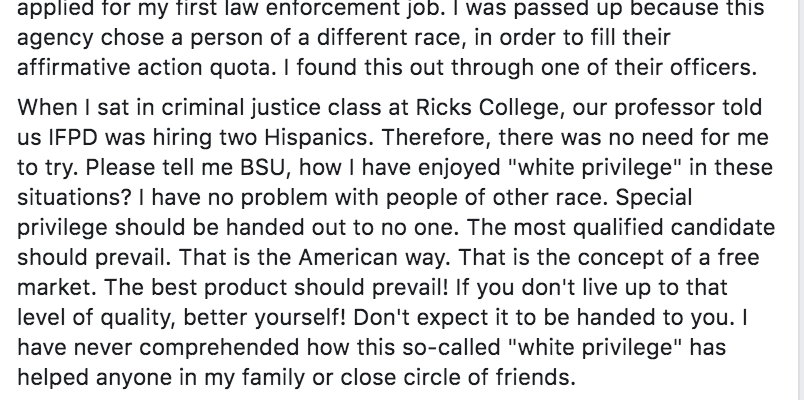
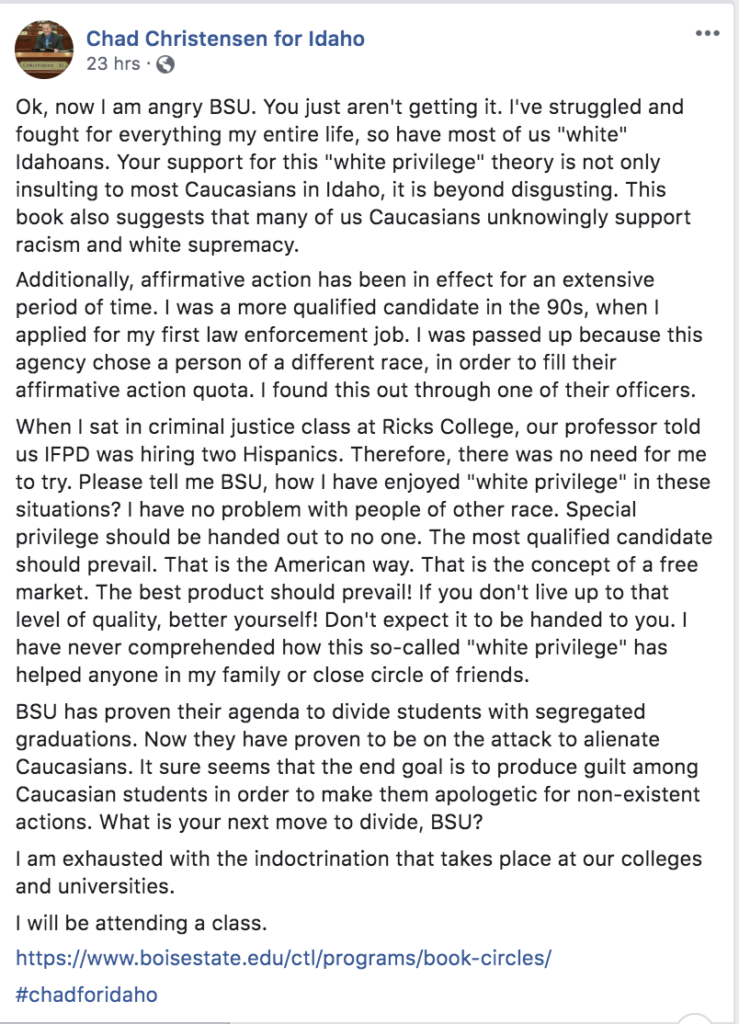
Screen shot of Chad Christensen's Facebook post, which is linked to later on this page

As we see in the primary sources for today’s class, there’s a long history of white Europeans and Americans describing indigenous Americans in ways that are personally, politically, and economically useful to white people. Their descriptions of indigenous peoples have led many historians, sociologists, anthropologists, cultural studies scholars, and others to delve into how colonizers have constructed whiteness.

This conversation continues today in both scholarly and popular circles. Just yesterday, even though he does not reference Native peoples, Idaho state Representative Chad Christensen posted on Facebook about the What Does It Mean to Be White? book circles at Boise State. In his post and in the comments on it, Christensen and his overwhelmingly white followers grapple with what it means to be white, and they characterize others—”Hispanics,” “Black colleges,” “mixed races black and Hispanic and something else,” as well as faculty and professional staff at Boise State—in opposition to themselves, and they do so in ways that suggest they have a fairly clear, albeit largely unarticulated, sense of what it means to be white in 21st-century Idaho.

Resources mentioned in class

Whiteness and “The Idaho Way”

  • Idaho state Representative Chad Christensen’s post about the What Does It Mean to Be White? book circles
  • Info on Boise State book circles reading What Does It Mean to Be White?
  • Boise State University has a copy of What Does It Mean to Be White? available at the Library Circulation Reserve desk
  • Opinion piece by Robin DiAngelo, author of What Does It Mean to Be White?, that summarizes her research and perspective
  • Letter from 28 Idaho state legislators to Boise State President Marlene Tromp

Primary sources/questions

  • New World primary sources from chapter 1 of The American Yawp Reader
  • Handout with questions about the sources (Word doc)

Filed Under: Material from class sessions

The New World, race, blood quantum

The New World, race, blood quantum

by Leslie Madsen · Sep 3, 2019

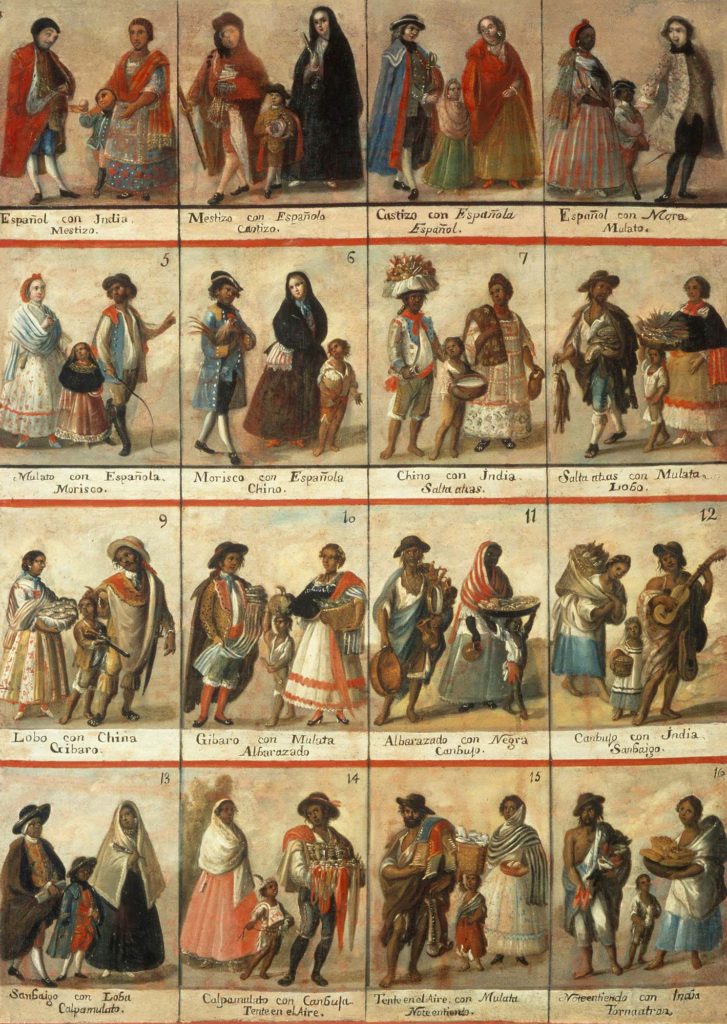
Unknown artist, “Las Castas,” Museo Nacional del Virreinato, Tepotzotlan, Mexico, via The American Yawp Reader.

Resources mentioned in class:

  • Blank world map
  • Code Switch, “So What Exactly is ‘Blood Quantum’?”
  • Tell Me More, “Who Is Native American, And Who Decides That?”

Filed Under: Material from class sessions

How to access the books for this course

by Leslie Madsen · Aug 30, 2019

Filed Under: How to, Resources

Reparations videos

by Leslie Madsen · Aug 29, 2019

Filed Under: Material from class sessions

Welcome to History 111: U.S. History I (to 1877)

Welcome to History 111: U.S. History I (to 1877)

by Leslie Madsen · Aug 27, 2019

I’m looking forward to this course! More content will appear here as we move through the semester. For now, explore the menu at the top of the page.

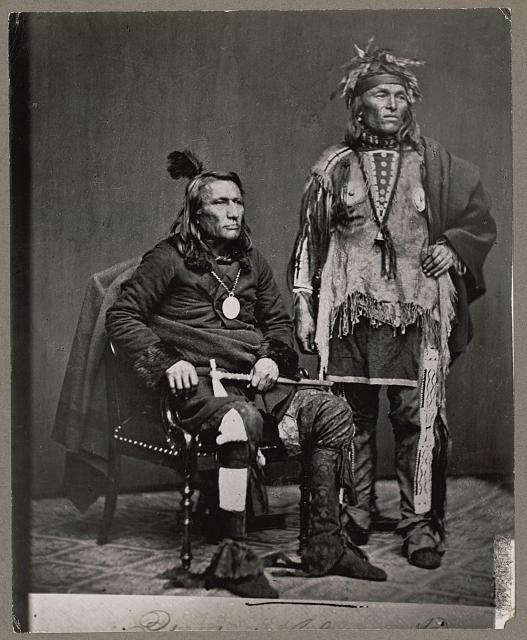
Mid-19th-century photo of Chief Crane, Potawatomi, holding tomahawk and unidentified Native American man in delegation to Washington
Chief Crane, Potawatomi, holding tomahawk and unidentified Native American man in delegation to Washington, D.C. Washington D.C, None. [Between 1855 and 1865, printed later] Photograph. https://www.loc.gov/item/2007678836/.
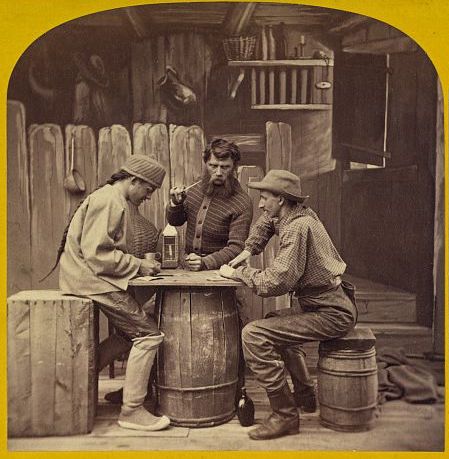
Photograph depicts a line from the poem Plain Language from Truthful James by Francis Bret Harte, 1870, showing Truthful James, Bill Nye, and Ah Sin sitting on boxes and barrels, cheating in a game of Euchre.
Harte, Bret, Weller, F. G, photographer. “Till at last he put down a right bower, which the same Nye had dealt unto me.” United States, ca. 1871. Littleton, N.H.: F.G. Weller, Jun. 12. Photograph. https://www.loc.gov/item/2006676729/.
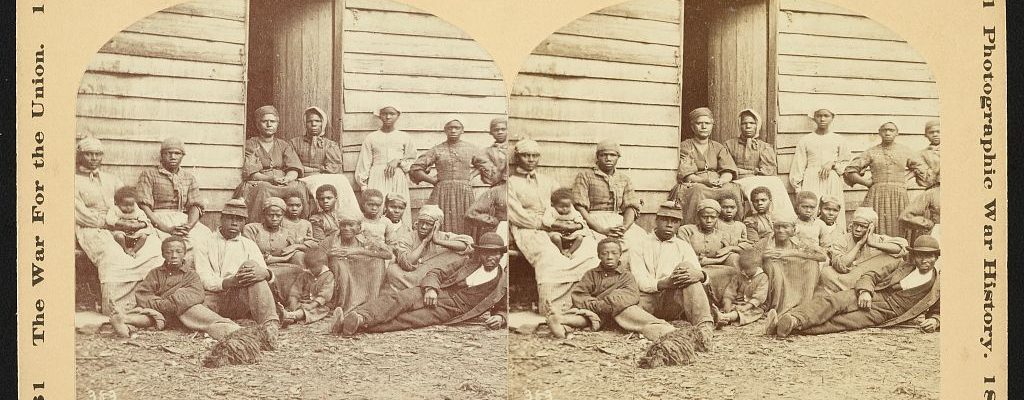
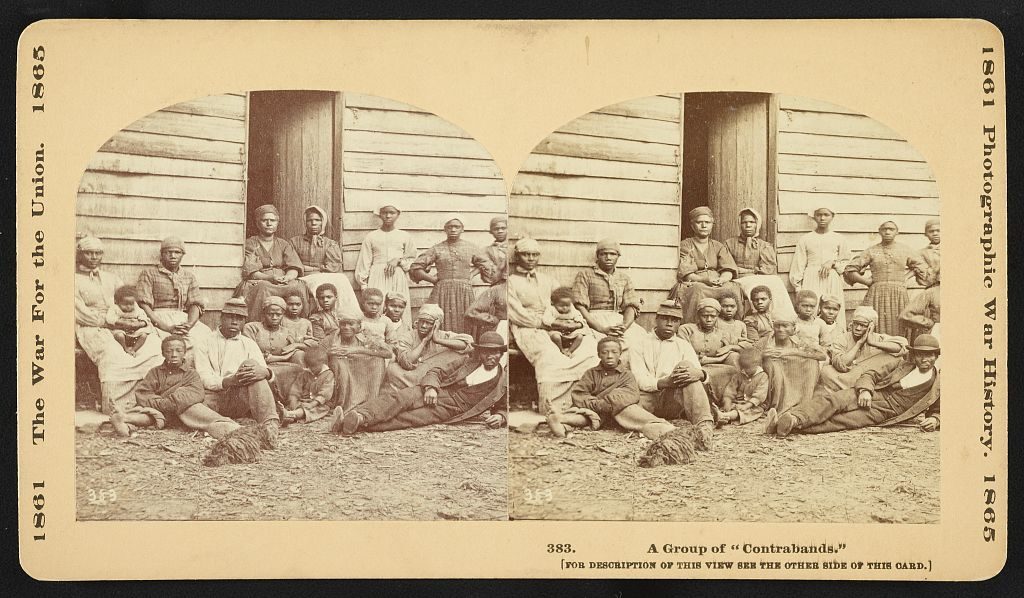
Stereograph showing a group of slaves including men, women and children gathered outside a building at the Foller Plantation in Cumberland Landing, Pamunkey Run, Virginia.
Gibson, James F, photographer. A Group of “contrabands”
. United States Virginia, 1862. [Hartford, Conn.: The War Photograph & Exhibition Co., No. 21 Linden Place] Photograph. https://www.loc.gov/item/2011660086/.

Filed Under: Uncategorized

« Previous Page

Copyright © 2026 · No Sidebar Pro on Genesis Framework · WordPress · Log in